How to Not Drown in Doom Right Now
I'm taking a pause from talking directly about perfectionism to address the tension in the water. I want to name out loud that I’m vehemently against ICE and what it stands for, and I condemn their actions in Minneapolis—and across the country—with my whole chest. I struggle with a heavy grief for those who have been abducted and killed, and an anxious sense of powerlessness to do much about it.
Many of my clients and group members feel much the same. Since 2020 (and even earlier), there’s been a thick doomy fog that never quite seems to dissipate. We’ve been collectively soaking in pandemics and politics and climate anxiety, all filtered through social and news media models that profit on anger and panic.
How can we keep our eyes and hearts open to hard realities without drowning? And how can we regular folk do anything to help?
Author, journalist, and personal hero Oliver Burkeman wrote an insightful chapter called You Can’t Care About Everything: On Staying Sane When the World’s a Mess. The whole book is worth a read, but this chapter is particularly salient.
“Assuming you’re the kind of person who cares about anything,” Burkeman writes, “you’re liable to be asked to care, with maximum intensity, about everything….Most of us, including me, would be entirely unable to function were we to experience the emotional impact of every killing or act of injustice around the world.”
The perfectionistic mindset tells us that if we’re not torturing ourselves with the news to stay informed on everything, then we’re not good people. But when we do so, our souls get chewed up, we burn out, and we don’t take any action. Then we avoid the news altogether, just to cope.
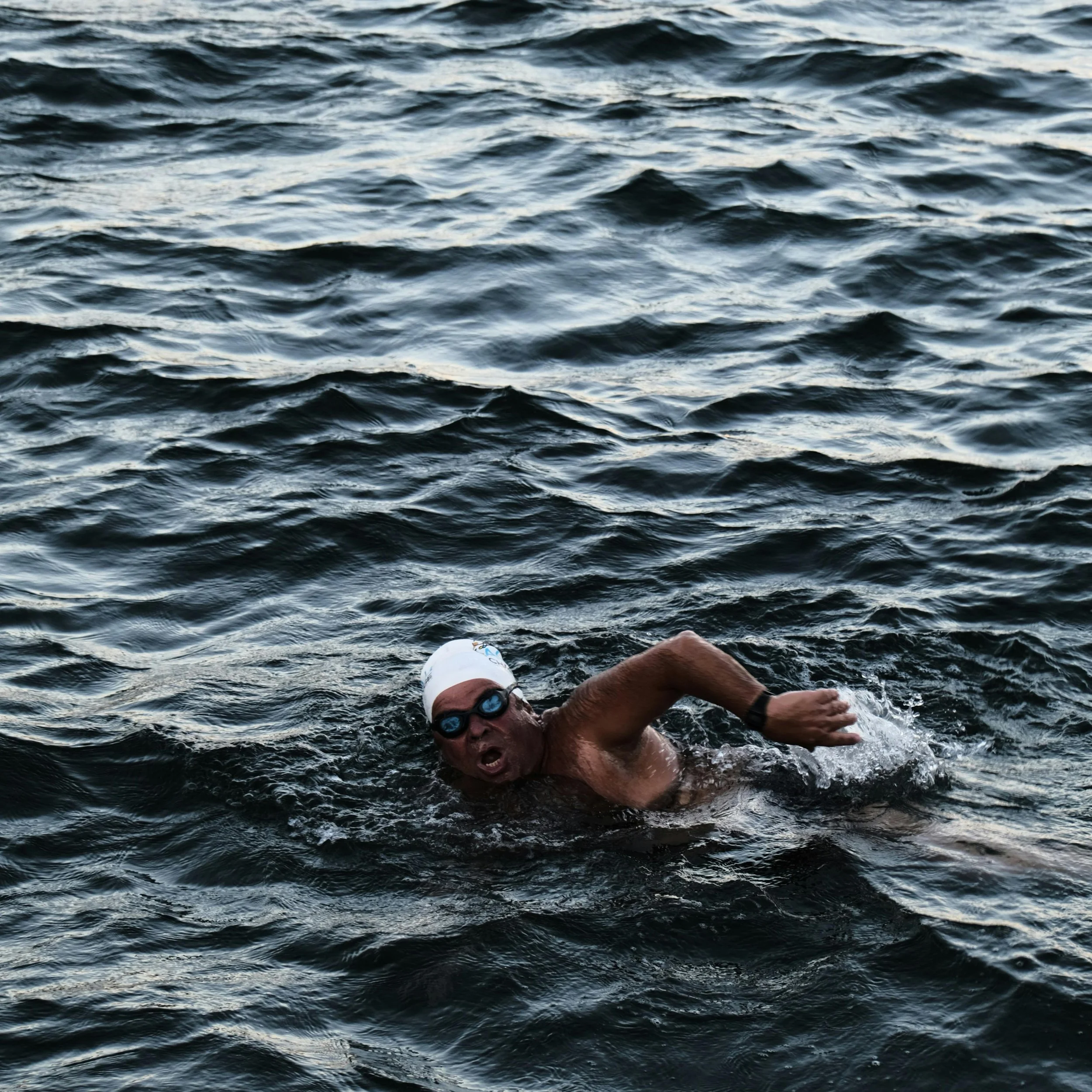
Moving forward is one way to not drown.
Photo by Eyupcan Timur via Pexels.com
Burke references another personal hero of mine, David Cain, with an idea that I can’t stop thinking about: a redistribution of care.
The idea is simple. Human caring hours are finite. If 50,000,000 people—about the population of Spain—care intensely about an atrocity or tragedy for six hours before the next crisis hits the news, not much actually changes. But if you gathered all that caring into one big barrel and then redistributed it to a group of 3,000 people, you’d have enough care-hours to last ten years. Imagine how impactful 3,000 passionate people can be when devoting their energy and care into making change over a decade.
Doomscroll-driven, scattershot care-hours may appeal to our perfectionistic insecurities, but clear-headed and focused care is what actually makes a difference. We are so much more powerful than we give ourselves credit for, I think, but it does take time and sustainable action. What could happen if you focused your care like a laser beam, not a disco ball?
I’ve got a lot more to say about surviving a doomscape while engaging in social change in an ethical and sustainable way. In fact, I started creating a few resources about a year ago on the idea of “imperfect activism,” and how to get unstuck from the mindset of, “I want to DO something, but what can I actually do?” But between a series of personal health problems and my own perfectionistic paralysis, I never brought it to life.
I would love to hear back from you on whether this is a useful line of discussion. I’d also love to hear how you, personally, cope with doom, or how you participate in imperfect activism. And I hope you find rest and joy exactly where you are.
© 2025–2026 Summer Hopkins Myers | Already Good
This work is original and protected. Sharing links is welcome; unattributed reproduction and LLM training is not.