Crappy Gods Theory
Don’t be fooled by the name: Crappy Gods Theory has nothing to do with religion. It’s a way of describing a set of psychological and developmental patterns that drive anxious perfectionism. And from all of my years as a psychotherapist, it might be the most important thing I can share with you.
So pardon me while I dig into the science for a second.
Developmental psychology tells us that babies and toddlers experience themselves as the center of the universe. This is not selfishness but a cognitive limitation. Early on, there’s no real capacity to imagine other minds with separate inner lives. The world is very small and coherent: you cry and someone comes, you’re hungry and someone feeds you. When needs arise, the universe responds. In these early conditions, it makes sense to develop a child-sized sense of omnipotence. Everything that happens—good or bad—feels connected to you.
But many children—especially sensitive, observant ones—notice early that the world has problems. Parents fight, a sibling struggles, pets and grandparents get sick. The news is filled with stories of suffering, loss, and danger. Sometimes the child’s imagination provides the problems, like feeling guilty for hurting the feelings of toys, or apologizing to objects that get broken.
When you combine that sensitivity with developmentally appropriate magical thinking, an unconscious conclusion forms: if something is wrong, and I’m the center of things, then it must somehow be my fault. Responsibility arrives before understanding does.
You can see this clearly in how hard it is to convince a child that his parents’ divorce isn’t his fault. No amount of rational explanation lands, because the brain isn't working from logic here. If you want to see it in real time, please watch this remarkable video of a little girl apologizing to autumn leaves, because “it’s all [her] fault” that they’re falling.
I cried when I watched it. It’s one of the clearest examples I’ve ever seen of how this pattern forms: a developing human brain with a sensitive heart assumes capabilities and responsibilities far outside of real human reach.
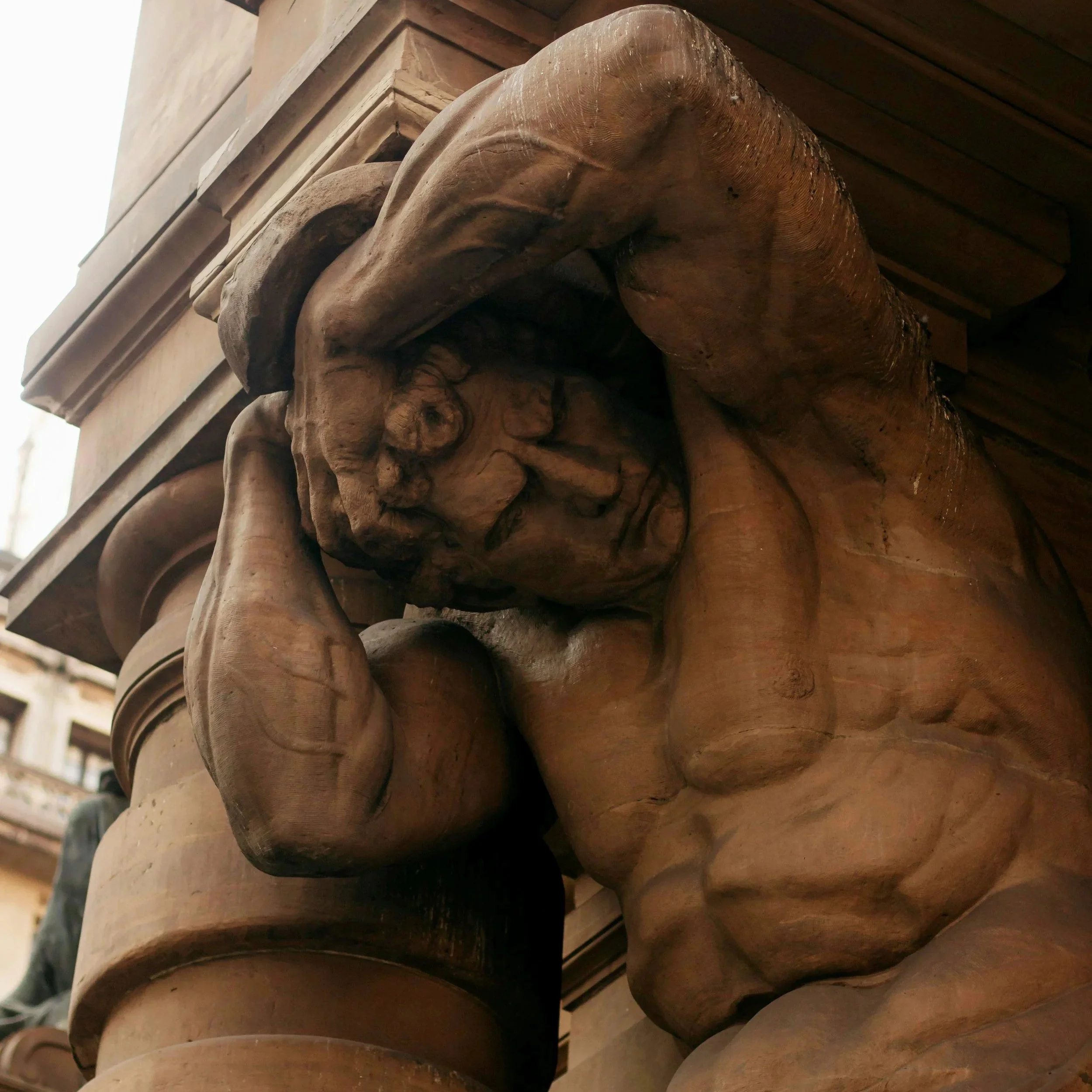
This is what it looks like when a human-sized body carries god-sized responsibility.
Photo by Leticia Curvelo via Pexels.com
These patterns create a latent, pervasive sense of shortcoming in our young selves. Then, when we become adults, the magical thinking fades while the mechanism remains. A part of us—the part I call the Guardian—continues to believe, unconsciously and persistently, that we are capable of and responsible for managing things perfectly. We sneakily suspect that with enough effort, insight, discipline, or moral clarity, we could fix ourselves. Fix our partner. Fix our bodies. Fix climate change. Be unproblematic. Prevent shame. Earn respect. Get love and approval…and save the autumn leaves from falling.
And when we inevitably fail at these superhuman tasks, we don’t conclude that the expectations were wrong—our brains are primed to conclude that we are. The Guardian declares that we’re capable of god-like perfection, and we’re failing.
Mid-century psychoanalyst Karen Horney identified this as tyranny of the ideal self. Over time, this tension between our ideal selves and our living selves becomes so familiar it feels like air. We stop noticing it. We live and breathe inside a constant sense of shortcoming.
Or, to put it more simply:
We go through life suspecting that we’re crappy gods
rather than recognizing that we’re incredible animals.
This is why it’s so much easier to feel compassion for someone else than for ourselves. Why we can see context, nuance, and humanity everywhere…except inward. Everyone else gets mercy. Everyone else gets room for mistakes. Everyone else gets grace, rest, body positivity, and benefit of the doubt…but not me.
This is what happens when we mistake our humanity for failed godhood.
© 2025–2026 Summer Hopkins Myers | Already Good
This work is original and protected. Sharing links is welcome; unattributed reproduction and LLM training is not.