The News (and How to Not Drown in Doom Right Now)
Last week, I shared the wisdom of a few of my favorite writers about how real impact only comes from focused, sustained effort on one or two causes, not a scattershot approach of feeling a little bit panicky about all of them all the time.
But it’s hard not to feel panicky right now. The news has been overwhelming.
I found out about the murder of Alex Pretti while standing in line with my son at a college tour on Saturday. One of the staff members looked at a news alert on her Apple Watch and muttered to herself, “The headlines these days! I’m turning this thing around.” I watched her rotate the watch on her wrist, so it wasn’t staring her in the face anymore.
Humans aren’t supposed to be exposed to murder and chaos as casually as we check the time. Our brains didn’t evolve for crises of this scale, rapidity, and complexity. Our nervous systems are designed for community living and community-scale problems, not a Niagara Falls of tragedies and outrages delivered by literal round-the-clock social and news media coverage on our computers, our phones, our televisions, and timepieces.
The most understandable impulse is to check out entirely. Stop looking, turn away. Sometimes that is the right move; compassion fatigue is real and boundaries matter. Burnout runs especially hot if you’ve got a completionist, perfectionist mindset about staying fully informed and caring about all of it.
But.
Chronic disengagement only serves those in power. I believe we have a shared responsibility to stay informed and take collective action for the wellbeing of our communities and our country.
So how do we shape a sustainable, constructive relationship with the news? How do we keep our eyes open without destroying ourselves?
Here are a few principles I’ve been holding onto:
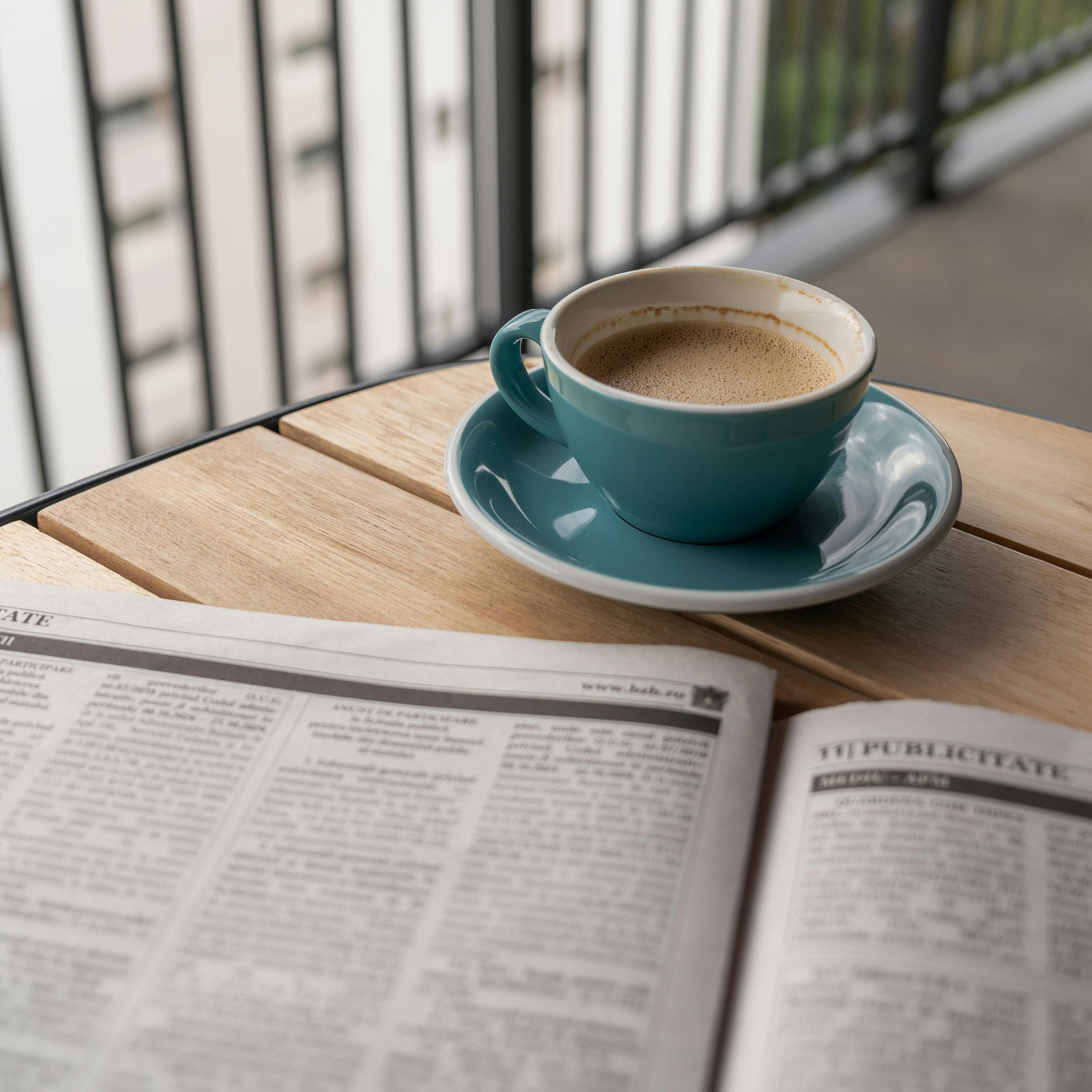
Perhaps our relationship with the news could look like a cup of tea and an intentional act of participation in civil discourse. And not an emotional ambush.
Photo by Iulian Sandu via Pexels.com
1. Choose how the news reaches you.
If your impulse is to check out, maybe it’s time to step back from outlets and platforms that sensationalize, polarize, or emotionally flood you. Social media—and much of cable news—are optimized for emotional hijacking, and this past week many of us were shown graphic and devastating content without our consent.
It’s okay to take a sabbatical from inflammatory sources. Turn off notifications, pause subscriptions and follows, leave the TV off. Consider getting your news from sources designed for education, not sensationalism. For example:
Your local news, which is often underfunded and deeply consequential.
A trusted international outlet. BBC, Reuters, Al Jazeera, or Deutsche Welle can offer more global context and a different tone than what many of us are used to.
A news aggregator that compares coverage across perspectives. Ground.news, for example, is an AI-powered aggregator* that shares headlines with fact-checking and political slant disclosures.
*Please note that AI only collects information. The work is done by real humans. Whether you read them or not, please consider purchasing subscriptions to your preferred news sources, as real journalism is very much needed in a democracy, and it very much needs our financial support.
2. Give your news a container.
Decide ahead of time:
When you’ll engage
For how long
And in what format
Maybe it’s 10 minutes every morning. Maybe it’s a longer session once a week. We’re looking for intentional over compulsive.
And while you’re having your appointment with the news, let yourself feel what you feel. Emotions need some time to digest.
3. Democracy is a group activity.
Authoritarian systems depend on fear, misinformation, and isolation. When people are overwhelmed and disconnected from one another, it becomes harder to organize, recover, and imagine better futures.
Democracy, by contrast, is a group activity. We aren’t meant to carry the weight of what’s happening alone. Share what you’re noticing and how it’s impacting you. Let yourself be held by people you trust—friends, family, chosen family, community members—and hold them right back. Making sense of the world together pulls us out of the doom spirals in our own heads and restores perspective. After all, a joy shared is twice the joy; a sorrow shared is half the sorrow.
At the same time, it’s okay to set boundaries around how political conversations happen. One of my group members recently shared a rule he uses in his own life: no complaining about politics unless you’re also doing something about it. I think it’s a nice way of keeping conversations from becoming another source of helplessness.
I want to name my intention for the next few weeks. I’ll be writing three more emails in this “How to Not Drown in Doom” series—one on self-care during doom times, one on maintaining relationships when the people we love hold very different values than we do, and one on taking real action when it feels like there's nothing we can do.
After that, we’ll return to our regularly scheduled perfectionism content.
Stay warm out there, friends.
© 2025–2026 Summer Hopkins Myers | Already Good
This work is original and protected. Sharing links is welcome; unattributed reproduction and LLM training is not.