Letting Genuine Gratitude In
Yesterday, I wrote about weaponized gratitude: the tidy little trick we use to shame ourselves out of messy feelings and paste over them with ‘I should be grateful.’ It’s self-invalidation masquerading as virtue, and it gets in the way of the real thing. But if we stop forcing thankfulness, how do we actually feel more of it?
Here’s what I know after years of sitting with anxious perfectionists, big feelers, overthinkers, and my own stubborn brain…
Genuine gratitude is not compulsory, not performed. It’s wild and trembling. It visits like a bird to a birdfeeder; it doesn’t come when we demand it but when we make space for it to land. With a bit of intention and attention, we can prepare ourselves to be the landing spot. Here are three small, accessible practices to try—
1. Stop trying. Start noticing.
Forced gratitude tells us to pick three nice things out of our head and write them down in a bulleted list. Real gratitude looks up and says, “Wait. I didn’t know leaves could get that red.” The world hands us magic in forms so ordinary we forget to look. Noticing is the humble price of admission to the feast around us.
Try this (right now, even):
Look around your space and name one thing that’s quietly supporting you: the chair holding your weight. The glasses letting you see clearly. The plant doing the miraculous work of turning light into food. The air that is simultaneously touching outer space and also wrapping your body in a perfectly you-shaped embrace.
Don’t try to feel something. Just notice. Gratitude will find you.
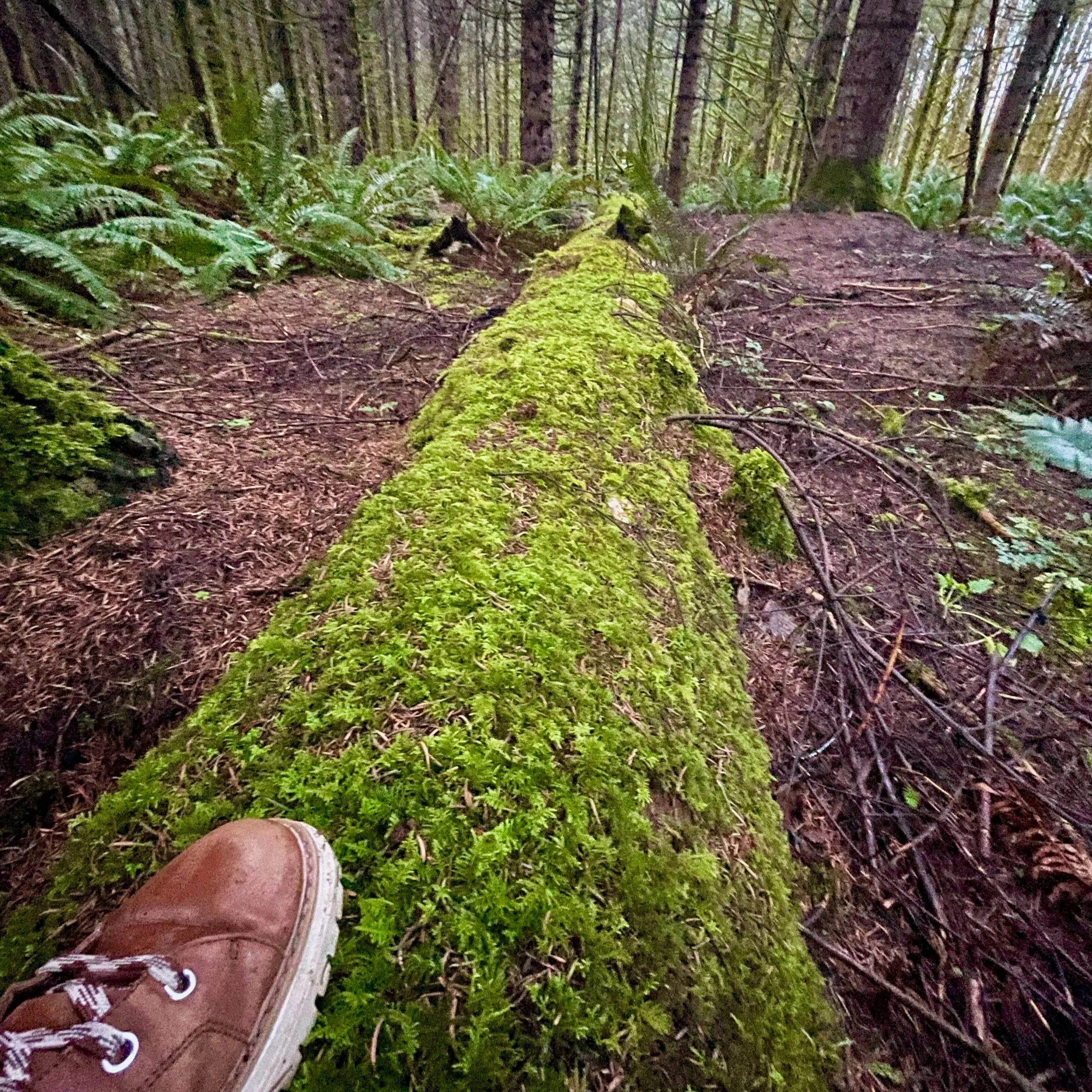
From a solo hike in Washington state. This fallen tree was doing so much good work for the moss and the bugs that I ended up thanking it out loud.
2. Make room for the feeling you’re trying to replace
Forced gratitude often follows another emotion that we’d rather not feel. But emotions aren’t polite and orderly: anger mixes with fear, awe overlaps with dread, and gratitude has a lot in common with grief (more on this next week). We can’t avoid one without avoiding the others.
If we’re trying to offer gratitude a seat at the table, the “unacceptable” feelings will be on the guest list, too. They’re not fun, but they’re honest, and gratitude can only be genuine in a space of emotional honesty.
One simple way to check what’s actually happening is to ask your body. The body is candid in a way the mind often isn’t. Are you expanding or bracing? Clenching or softening? Shoulders lifted or hanging easy? Jaw tight or loose?
Just notice. No judging, no fixing. Your body is only reporting the weather.
3. Shift from “Why don’t I feel grateful?” to “Where has gratitude already shown up?”
We carry so many unspoken rules about gratitude: how often we should feel it, how deeply, how spontaneously. And when we don’t hit those marks, we assume there’s something wrong with us. Are we ungrateful? Spoiled? Emotionally defective?
Think back to the moments when gratitude arrived on its own terms. It doesn’t have to be when a baby was born or you got a new job. Maybe it was brief and quiet, like your dog resting her head in your lap on a hard day. Maybe it was strange and surprising, like a hailstorm trapping you in a gas station with a dozen strangers who suddenly feel like comrades.
These memories are good data. Each one teaches something about what opens you, what softens you, what conditions let gratitude find you. What do they have in common? What part would you miss if it had never happened?
Your job isn’t to generate gratitude; it’s to recognize the frequency it already hums at.
Gratitude doesn’t respond to pressure. You don’t have to earn it, coerce it, or do it “right.” It’s something that finds us when there’s room inside to land.
Next week, we’ll talk about the weird and beautiful relationship between gratitude and grief. But as you move through this week of thankfulness, don’t force anything. Just notice. Remember the moments that moved you. Make a little space for the feelings that arrive with it all. That’s all the invitation gratitude really needs.
© 2025–2026 Summer Hopkins Myers | Already Good
This work is original and protected. Sharing links is welcome; unattributed reproduction and LLM training is not.