On Grief and Gratitude
“Grief and gratitude are two sides of the same coin. One informs the other, deepens the other.”
—Francis Weller, The Wild Edge of Sorrow
Last week’s post explored genuine gratitude—the moving, humbling kind that gets glossed over by holiday hustle and platitudes. But as the nights get longer and the cold gets colder, there’s one more piece I’ve been wanting to share:
Gratitude and grief are twins.
The ancient Greek Stoics practiced something called premeditatio malorum—the “premeditation of hardship.” Seneca, Epictetus, and their friends might spend an evening imagining the loss of something they ordinarily took for granted: their property, their health, the face of someone they loved. Perhaps they would close their eyes and imagine themselves blind for a time. It was a way of stripping away familiarity long enough for meaning to come back into focus. When they opened their eyes, still able to see, the ordinary returned as something miraculous.
You’ve probably felt this yourself: when the electricity comes back on after hours of darkness. When you recover after days of illness. When something you rely on returns after a temporary absence.
For years, I facilitated a chronic illness support group. Most members lived with daily pain, uncertainty, and debilitating fatigue. But sometimes someone would have a rare “normal” day. We called them Cinderella Days: brief escapes from the soot and drudgery, but only until the magic wore off around midnight. An able-bodied friend might move through those same hours without noticing anything remarkable, but our group would celebrate—we knew how precious “okay” is when it rarely happens.
Our appreciation for these things is rooted in the ache we feel when they go away. All good things—sight, relationships, health, good days—are temporary. When they are present, our awareness of their impermanence brightens them as exceptions and as miracles. In other words:
Gratitude is grief before the loss comes.
Grief is gratitude after the loss.
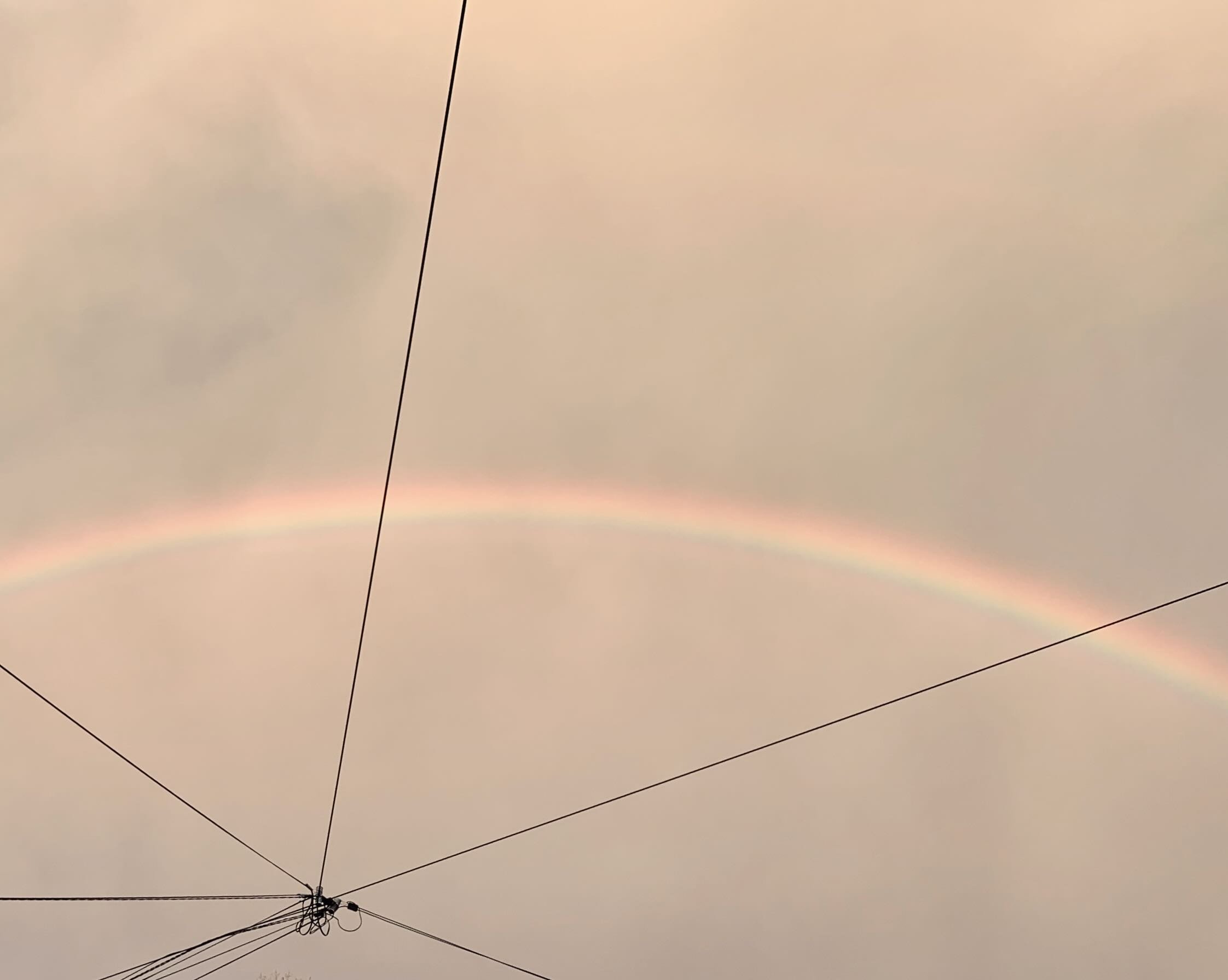
A rainbow seems like a proper example of beauty intertwined with impermanence. Plus, I took the photo through a couple of intersecting power lines, and I thought it looked neat.
I lost two friends to cancer while I was in graduate school. Both were young-ish; both had families of their own. Because they knew their time was limited, our final adventures together was steeped in an intimacy, appreciation, and bittersweet urgency I’ve never been able to replicate with my well friends. And after their deaths, my mourning has been colored by awe at the people they were—just ordinary, wonderful people—and the fact that they spent a slice of their limited time with me.
My grief and my gratitude for them are made of the same stuff:
The gift of their presence,
the pain of their absence,
and the love running through both.
© 2025–2026 Summer Hopkins Myers | Already Good
This work is original and protected. Sharing links is welcome; unattributed reproduction and LLM training is not.