Productivity is a Tool, Not a Virtue
Ironically—while in the middle of writing an email series about Deprogramming from the Cult of Productivity—I managed to overstack my own task list, undersleep, and flare up my chronic illness in the process. I got very ambitious about how much I could carry, and my body said: over my dead body.
Which feels a little on the nose.
So I didn’t write for the past couple of weeks. And just this morning, I took a few really uncomfortable steps to disidentify from being a very hard worker who does all the things. (Why is it so hard?)
If you listen for it, you’ll start to notice that perhaps the most common compliment an American will give is that someone is “a hard worker.”
Our culture treats productivity as a personality trait, a moral imperative, and the default state for any decent human being. Rest, meanwhile, gets treated like an indulgent treat that must be justified or earned.
I want to offer a reframe:
Productivity is a tool. Nothing more.
If productivity is just one tool, then calling someone a “hard worker” is the equivalent of saying someone “happens to use a hammer a lot.” A hammer is not inherently virtuous: it’s just a tool that helps with certain projects. And hammers, in many situations, are inappropriate—destructive, even.
You’ve probably heard the saying: 'When all you have is a hammer, every problem looks like a nail.' So if all we have in our toolbox is productivity, we tend to throw it at everything. What if it's not always appropriate?
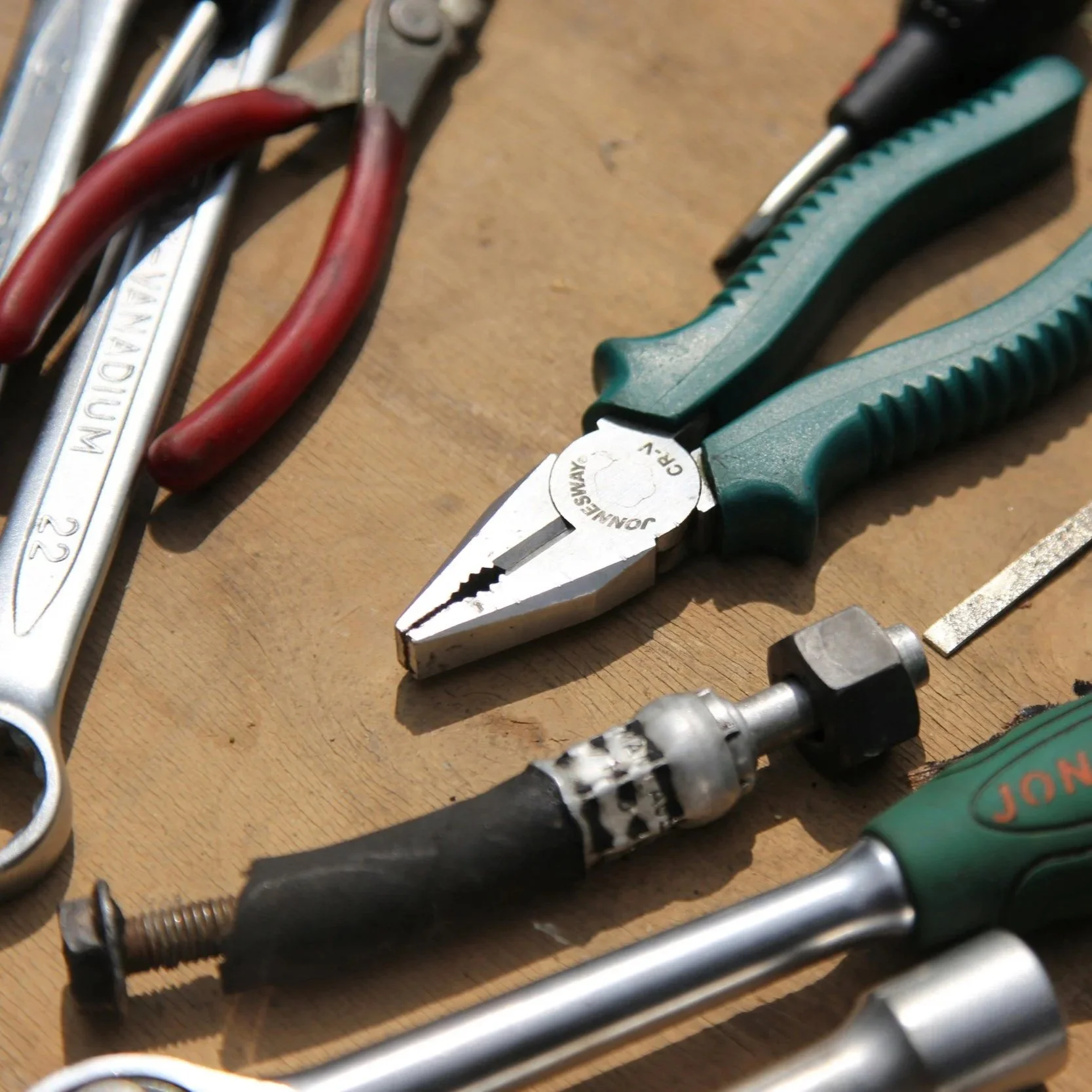
A variety of perfectly neutral tools, morally speaking.
Photo by Svetlana Photographer via Pexels.com
Tools are morally neutral. There are many legitimate tools to accomplish our goals. Productivity is one. There are others, including:
Working smarter instead of harder. Getting training. Learning shortcuts.
Asking for help. Delegating. Letting someone else carry part of the load.
Paying for support or convenience, as resources allow. A dishwasher is one such tool. So is grocery delivery.
Reducing the scope. Frozen vegetables instead of chopping fresh ones. A shorter presentation that doesn’t have to one-up the last one. A simpler holiday.
Removing the task entirely. Opting out. Changing the standard. Realizing the task was assumed or inherited, and nobody’s really asking you for it.
Designing systems instead of relying on brute force. Automatic bill pay. Medication reminders. Keeping the basket where clutter actually accumulates instead of where you think it “should” go.
Matching tasks to energy. Creative work when focused. Administrative work when in a lull. Resting before exhaustion forces the issue.
Leaning on community. Trading favors. Shared meals. Carpooling. Body doubling.
None of these methods are morally inferior to white-knuckling our way through life.
But many of us have absorbed the idea that “real” accomplishment only counts if it comes from effort, discipline, and personal sacrifice. Productivity culture treats struggle as virtue and rest as dubious.
Underneath it all is the fear that if we stop striving so hard, we might not earn our worth. Might get judged. Might stop being good.
Maybe productivity is not a default or an ideal, but is just one tool for reaching our goals.
And maybe we were already good.
© 2026 Summer Hopkins Myers | Already Good
This work is original and protected. Sharing links is welcome; unattributed reproduction and LLM training are not.