The Pot of Gold at the End of the To-Do List
For these past two weeks, I’ve been grinding away under the weight of a (largely self-imposed) to-do list. Just that steady, humming pressure of too many things, always slightly undone. Then feeling like I’m permanently behind and letting people down. And then marinating myself in a mix of shame, avoidance, and Netflix.
But not actually resting, of course. Because genuine relaxation—which could involve Netflix, but in this case definitely didn’t—is something I should only allow myself after I get my to-do’s done, right?
I’ve been a therapist for too many years to think that I’m the only one that does this. That gatekeeps my own rest and enjoyment until after I’ve ‘earned it’ and holds my breath until I’m ‘all caught up.’
But also, after years as a therapist, this is what I’ve learned:
If you don’t have a to-do list, it means you’re dead.
I don’t mean that flippantly. I mean it quite literally.
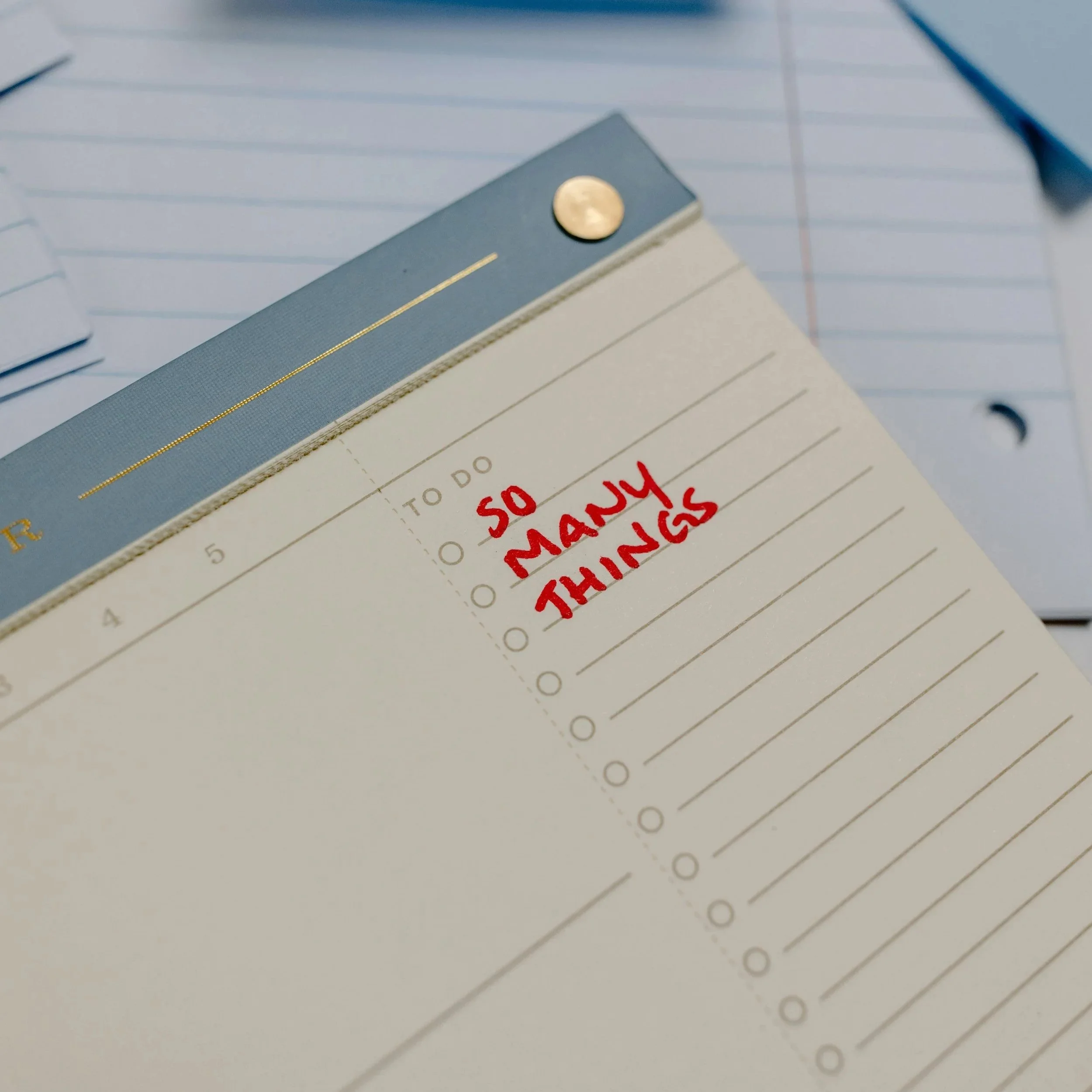
When I say "to-do list", I don't necessarily mean a written list. For those of us who put the 'fun' in executive dys-fun-ction, maybe it's more like a slippery mental mountain of nagging tasks shrouded in a vague fog of urgency.
Photo by Tara Winstead via Pexels.com
As long as you’re alive, there will be things to do: feeding and cleaning, connecting and dividing, growing and trimming, building and resting. Life generates tasks. There’s a wonderfully anti-perfectionistic book called How to Keep House While Drowning that calls these tasks ”life maintenance.”
And what a gorgeous business, maintaining life.
But so many of us live like there’s a version of us who will someday finish everything. Then, at last, we can relax our shoulders and begin our real life; our post-to-do-list afterlife.
I don’t think the problem is that there’s always things to do. I think the problem comes when we engage with our to-do list like it’s a “shortcomings list;” a moral document whose perpetual incompletion condemns us a little bit at the end of every day. So I propose a different relationship to it:
Let’s live in peaceful parallel with our to-do lists.
Let’s find harmony—even enjoyment—in the daily tasks of life maintenance and in the big, overwhelming tasks of work, school, and family. Let’s practice really giving the tasks their time so that we can have some time without the tasks. Let’s not wait for to-do’s to get out of the way before we turn up the vibrancy settings on our own life.
I’m going to dive into the practical application of these ideas in the coming weeks as I share a series I’ve affectionately named Deprogramming from the Cult of Productivity. Or, if you want to work this stuff out as the rubber hits the road, consider hopping into the Group. I would love to dig in with you.
© 2026 Summer Hopkins Myers | Already Good
This work is original and protected. Sharing links is welcome; unattributed reproduction and LLM training is not.